What is a Title Search in WA (and why does it matter)?
When you’re buying a property in Western Australia, you’ll likely see a document called a title search. It’s one of those documents that pops up early in the conveyancing process, often attached to the contract or ordered by your settlement agent. But what exactly is a title search? What information does it contain? And, most importantly, why should you care about it when making an offer on a property?
What is a title search?
A title search (sometimes called a Certificate of Title) is an official document issued by Landgate, WA’s land titles office.
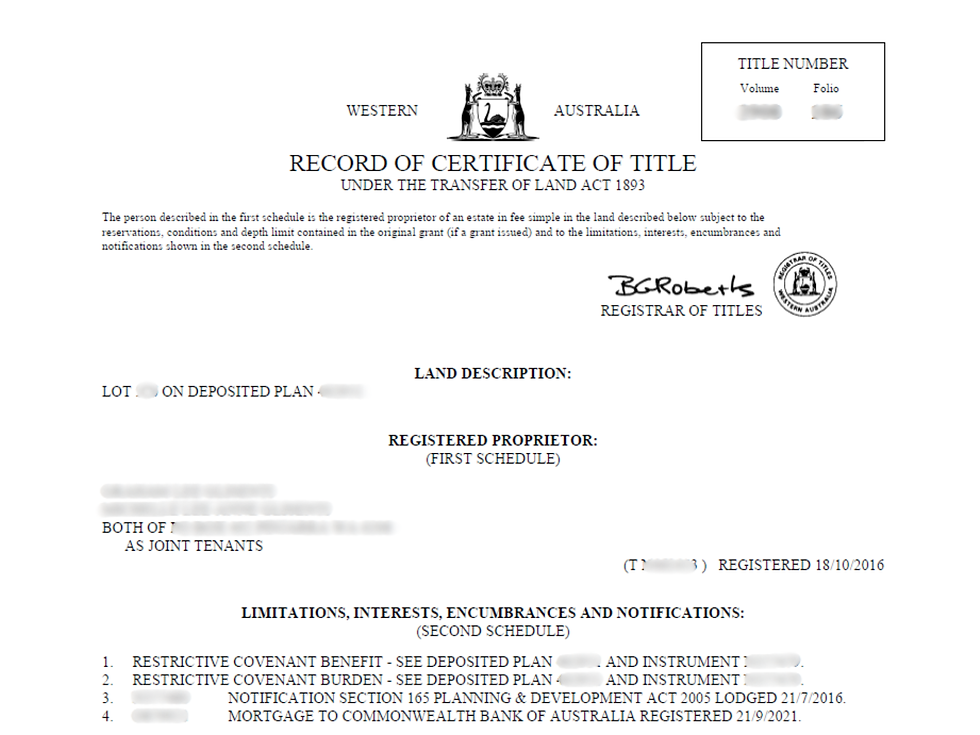
It shows the legal ownership of a property and lists any registered interests or encumbrances that affect it, things like mortgages, caveats, easements, or restrictive covenants.
Think of it as a snapshot in time of the property’s legal status at the exact moment it’s ordered. It tells you who owns it, how it’s owned (e.g. as joint tenants or tenants in common), and what legal rights or restrictions are recorded against the land.
What doesn’t a title search show?
While a title search provides important legal information, it doesn’t tell you everything about the property. Some matters that affect the land aren’t “registerable” interests, meaning they won’t appear on the title at all. Examples include:
Building approvals and permits
Zoning and planning restrictions
Outstanding council rates or water bills
That’s why a title search is only one part of the due diligence process when buying. Your settlement agent and other professionals (like your building inspector or local council) help you fill in the rest of the picture.
Common encumbrances and what they mean
Here are some of the most common items you might see on a WA title search, and what they mean in plain English.
1. Mortgage
A mortgage is a registered interest that gives someone who has lent money to the property owner (usually a bank) the right to the property as security for a loan.
In most cases, the seller’s lender will have a mortgage registered on the title until the property is paid off. When the property sells, that mortgage is discharged at settlement (meaning the bank’s interest is removed), and the new owner receives a clear title.
If you’re getting a loan for the property purchase, your own lender will then register a new mortgage in its place. It’s a standard part of almost every financed property transaction in WA.
2. Caveat
A caveat is a notice that someone (other than the registered owner) has an interest in the property. This could be due to a personal dispute between the owner and a third party, for example, if the owner owes money. These caveats get removed as part of the settlement process.
However, some caveats remain after settlement. For example, properties in certain developments (like the Iluka Home Owners Association) have caveats that stay registered to enforce ongoing rules or fees.
Your conveyancer will be able to explain to you whether a particular caveat will be removed at settlement or if it will remain in place (and thus impact you) following settlement.
3. Restrictive Covenant
A restrictive covenant limits the use or development of the land. You might see one stating that you can’t subdivide, build above a certain height, or use particular materials for your house’s exterior.
These restrictions “run with the land,” meaning they apply to future owners too, so always read them carefully. They often have expiry dates too, so you might find that if they’re expired, they’ll drop off the title at settlement.
4. Easement
An easement gives someone the legal right to use part of your property for a specific purpose, such as:
Power, water, or sewerage infrastructure
Shared driveways or access roads
Drainage
Easements are usually shown on the property’s plan and don’t necessarily impact your use of the land, but they’re worth noting before you build or install fencing or a pool, for example.
5. Memorial (Land Tax)
This is a Land Tax memorial recorded by the Department of Treasury & Finance. It typically applies to investment or commercial properties where land tax is payable and doesn’t usually affect owner-occupied homes. Your conveyancer will ensure it’s paid by the seller and removed as part of the settlement process.
6. Memorial (Contaminated Sites)
This memorial appears when a property is registered under the Contaminated Sites Act. It may alert current and future owners that contamination has been identified, remediated or that investigations are underway. Not all properties impacted by contaminated sites have a memorial lodged. We strongly recommend obtaining a Property Interest Report from Landgate as part of your due diligence before making an offer.
7. Notification (Bushfire, Flood, or Coastal Risk)
A notification flags that the property is subject to a specific environmental or safety risk, such as being in a bushfire-prone area, floodplain, coastal erosion zone, or impacted by mosquitoes.
These aren’t deal-breakers, but they are important to be aware of, as they may affect your insurance or building approvals.
8. Section 70A Notifications
Under the Local Government Act, councils can register a Section 70A Notification to highlight information that future owners should be aware of, such as a building envelope restriction, noise exposure from nearby industry, or requirements under a local structure plan.
Why recency matters
Because a title search is a snapshot in time, it only shows information that was registered up to that date. If new encumbrances or bylaws are added later, they won’t appear on older copies.
That’s why it’s essential to make sure the title search (and any associated plans, like a strata plan) are current when you review them.
A real-world example: how a cat prevented my client from buying a property
Recently, we reviewed a contract for a client purchasing a strata property. He mentioned that he had a cat he wanted to bring with him when he moved in. We noticed that the strata plan attached to the contract was more than three years old, so we recommended that he request an updated copy before making his offer.
When he did, it turned out the strata company had registered a new by-law prohibiting pets within the complex, something that wasn’t shown on the outdated version.
Because he’d reviewed the current plan before signing, he avoided buying into a property that wouldn’t have suited his lifestyle.
It’s a perfect example of why even small details, such as the date of the title or strata search, can make a significant difference.
Why a title search matters when making an offer
Your conveyancer will always review the title and any encumbrances during the settlement process, but having a basic understanding upfront helps you make informed decisions before you sign.
You’ll know if there are restrictions that could affect your plans.
You’ll be aware of any risks or responsibilities that come with the property.
Even if everything looks straightforward, it’s worth having your settlement agent take a quick look at the title search before making an offer, especially if the property is part of a strata, new estate or development.
FAQ: title searches in WA
What is a title search?
A title search (or Certificate of Title) is an official record from Landgate showing who owns a property and any registered encumbrances or interests.
How do I get a title search in WA?
Your conveyancer or real estate agent can order one, or you can purchase it directly through Landgate online.
How current should a title search be?
Ideally, it should be less than a few weeks old. Always check the “search date” at the bottom of the document.
Does a title search show building approvals or zoning?
No. These are handled through local councils and planning authorities.
What’s the difference between a memorial and a notification?
A memorial usually relates to land tax, contaminated sites, or legal matters. A notification highlights issues such as environmental or planning restrictions.
Buying in WA and want clarity around your title or strata documents?
North Shore Conveyancing helps homebuyers understand what they’re signing before they commit. We’ll review your title search, explain any encumbrances in plain English, and make sure you’re confident about what you’re buying.
Contact Katelyn today for expert advice before making your next offer.